
Leadership, management and performance
To develop the ability to lead, motivate teams and drive performance in challenging environments.

High-calibre expertise to build capacity, transform organisations and address major development challenges
The IIRCF’s Areas of Excellence provide the framework for the key fields in which the Institute develops its training programmes, certifications and capacity-building solutions.
They address the transformations that are currently redefining the responsibilities of leaders, managers, professionals and institutions: evolving governance models, increasingly complex decision-making, investment management, digital transformation, new challenges in human capital, compliance requirements, the climate transition and changing international relations.

Each field brings together specialist expertise, clearly defined skills and programmes designed to enable professionals to master complex issues, strengthen their practice and fulfil their responsibilities to a higher standard.
The IIRCF organises its expertise around ten complementary Areas of Excellence.
To develop the ability to lead, motivate teams and drive performance in challenging environments.
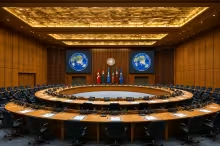
Strengthening public decision-making, the implementation of reforms and the performance of institutions.

To manage the design, structuring, governance, implementation and recovery of complex projects, programmes and investments.

To develop the necessary capacity to allocate resources, organise funding, evaluate investments and strengthen financial governance.

To strengthen the governance and performance of social protection systems, social security institutions and occupational risk prevention schemes.

To prepare professions and organisations for new ways of using digital technology, data and artificial intelligence.

Anticipating changes in the workplace, developing talent and supporting new ways of working.

Strengthen the audit, internal control, risk management, compliance and integrity frameworks that underpin trust and organisational accountability.

To develop the necessary capacity to integrate climate, environmental and territorial issues into development policies, strategies and projects.

To strengthen skills in development policy, international co-operation, partnerships, negotiation, development diplomacy and the management of international programmes.
Major professional and institutional challenges rarely fall within a single area of expertise. An investment project may also require expertise in finance, digital technology, the environment or governance. A public sector reform may simultaneously require skills in project leadership, change management, evaluation and resource mobilisation.
The structure of the Areas of Excellence thus enables us to maintain a high level of specialisation in each field, whilst fostering the necessary links to understand and address complex issues.

The quality of the Areas of Excellence rests on the involvement of individuals capable of combining conceptual expertise, organisational experience and an understanding of professional realities.
In particular, the IIRCF draws on professors, engineers, sector experts and experienced executives from academic, technical, institutional and professional backgrounds. Their involvement enables the most relevant knowledge to be linked to the practical situations faced by participants and organisations.
Depending on the programmes and assignments, the Institute puts together teams of experts tailored to the issues at hand, in order to ensure the relevance of the content, the quality of the learning experience and its applicability in professional settings.